A lot of enterprise AI still lives in the prototype phase: a language model, a vector store, some prompt engineering, and a demo that works just well enough to get attention. Then the real requirements arrive. The system needs to explain its answers, ground them in business context, handle complex relationships across datasets, and stay reliable when people start making decisions from the output.
That is where GraphRAG starts to matter. Not as a buzzword, but as a practical shift from retrieving loose snippets of text to retrieving structured meaning. In enterprise settings, that difference is the line between an interesting assistant and a dependable system.
01 What GraphRAG Changes
Traditional RAG is useful, but limited. It retrieves chunks of text that look relevant, passes them to an LLM, and hopes the model assembles a good answer. That can work for lightweight search and summarisation. It breaks down when the answer depends on relationships: which asset belongs to which site, which regulation applies to which project, which document supersedes another, or how multiple constraints interact.
GraphRAG connects the model to a knowledge graph rather than a pile of disconnected text fragments. That means retrieval can follow entities, links, hierarchies, and context across multiple hops. The result is better reasoning, stronger traceability, and a system that is far less likely to invent a confident answer from incomplete evidence.
02 Why Prototypes Stall
Most organisations do not fail because the idea is wrong. They fail because the delivery model is fragile. Code-heavy pipelines built by a small number of specialists are hard to debug, hard to govern, and hard to adapt when business users need a workflow to evolve.
The symptoms are familiar: black-box prompts, brittle retrieval chains, no clear audit trail, and endless engineering effort spent maintaining plumbing instead of improving the decision logic. A prototype may answer questions. An enterprise system has to answer them reliably, repeatedly, and in a way that can be inspected when the stakes are high.
For regulated and operational environments, that bar matters. If a team cannot see why an answer was produced, which sources were used, and where the workflow can fail, then the system is not ready for production no matter how impressive the demo looked.
03 What Enterprise GraphRAG Needs
First, it needs a structured backbone. A knowledge graph is not an optional enhancement added at the end. It is the mechanism that preserves meaning across systems, formats, and domains so retrieval can work with context instead of keywords alone.
Second, it needs workflow control. Teams need templates, guardrails, and a clear way to adapt business logic without rebuilding the stack from scratch each time. Low-code control matters here, not because code is bad, but because delivery accelerates when domain experts can shape the workflow alongside engineers.
Third, it needs governance. Monitoring, profiling, error tracing, and grounded outputs are not “nice-to-have” features. They are the operating requirements that let an AI workflow move from pilot to production.
04 From Concept to Production
The path is simpler than many teams assume. Start with a defined use case: policy Q&A, technical support, document intelligence, planning constraints, or another workflow where context and traceability matter. Then shape the retrieval logic around the entities, relationships, and rules the business actually uses.
Once that structure is in place, adapt the workflow rather than rewriting it. Tune the logic, connect the right sources, add the right controls, and monitor how the system behaves in production. That is how teams shorten time-to-value without accepting the risk of another opaque AI experiment.
In practice, the winning pattern is usually the same: select a proven workflow, adapt it to the domain, and ship it with monitoring from day one.
Why this matters for spatial intelligence
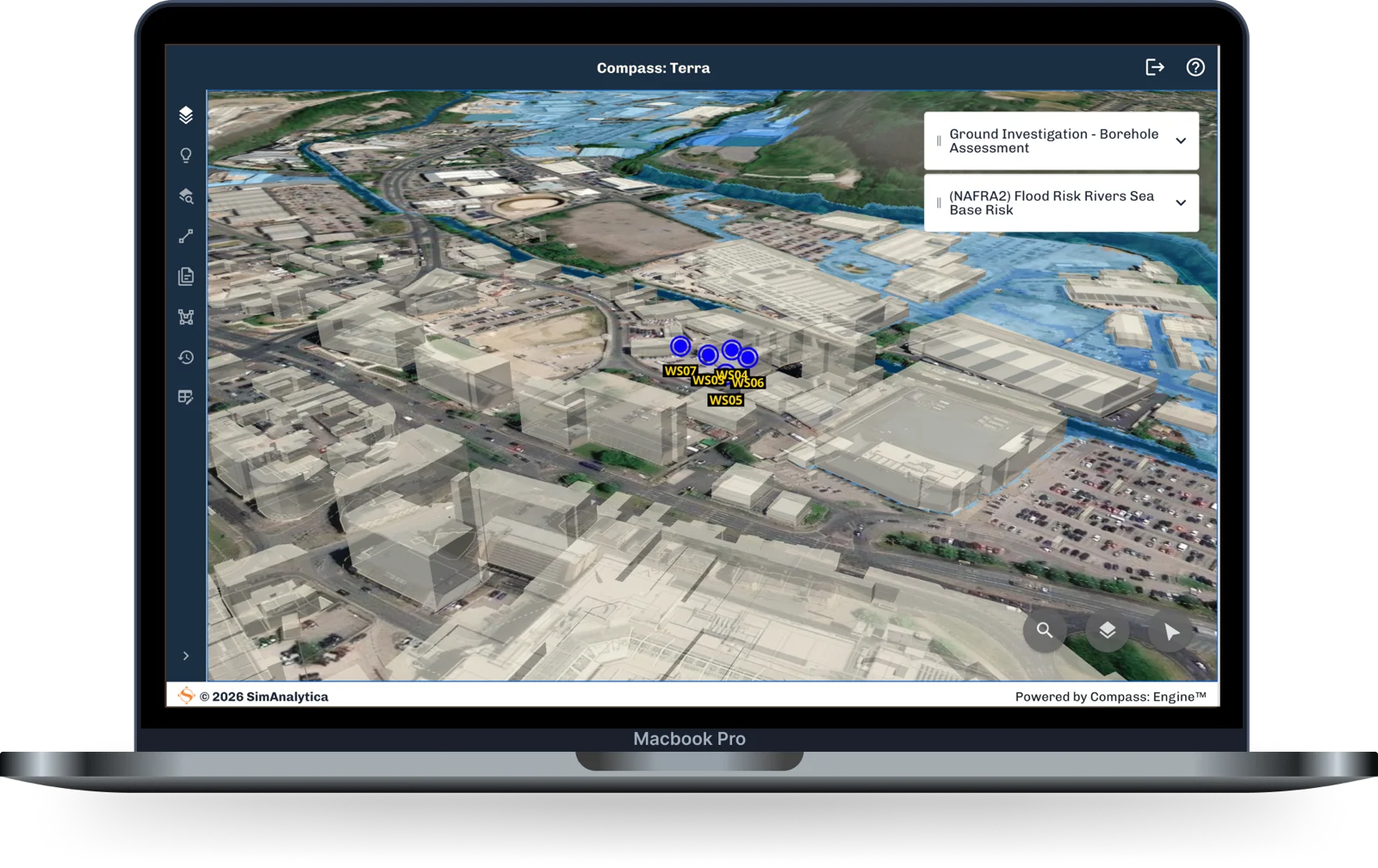
SimAnalytica builds AI systems for problems where place, infrastructure, regulation, and physical context all matter. That means retrieval cannot stop at document search. It has to understand relationships across assets, locations, constraints, and models. GraphRAG is one of the clearest ways to make that possible.
Request a DemoThis article was written as an original SimAnalytica perspective inspired by current industry discussion around enterprise GraphRAG, including recent material published by Graphwise on production-ready GraphRAG workflows.